LVT, SPC, and ABA are all popular vinyl-based flooring varieties, but they differ significantly in core structure, material composition, performance characteristics, and application scenarios. Here is a detailed breakdown of their differences:
LVT (Luxury Vinyl Tile)
Core Structure & Materials: It is a semi-rigid sheet flooring mainly composed of a high proportion of PVC resin plus a small amount of calcium carbonate powder. Its structure usually includes a UV wear-resistant layer, a decorative film layer, and an LVT substrate layer. Some products also add a glass fiber mesh in the middle layer to reduce deformation caused by temperature changes.
Key Performance: It has notable flexibility and can even be rolled into coils, offering a relatively comfortable foot feel. However, its compression resistance and wear resistance are inferior to those of SPC and ABA. It has strict requirements for the flatness of the ground during laying; uneven surfaces can easily affect its service life.
Installation & Application: Installation methods are diverse, including glue-down and click-lock options. It is commonly used in places such as kindergartens, offices, and game rooms, where its elasticity can better cushion impacts and reduce potential injuries. Its thickness generally does not exceed 5mm, making it suitable for large-area paving in commercial and light residential scenarios.
SPC (Stone Plastic Composite)
Core Structure & Materials: Referred to as stone crystal flooring, it is a rigid sheet flooring made of 25% PVC resin and 75% calcium carbonate powder. Its structure consists of three main layers: a surface wear-resistant layer, a digital printed decorative film layer, and a dense substrate layer pressed from stone powder and PVC.
Key Performance: It excels in water and moisture resistance, and is not prone to deformation or mold, even in humid environments like kitchens and bathrooms. It also has high impact resistance and scratch resistance. Moreover, it features excellent dimensional stability and is not easily warped by temperature fluctuations. However, its rigid texture results in a harder foot feel, and it is heavier than LVT.
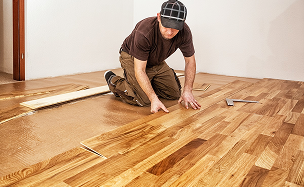
Installation & Application: It adopts a universal click-lock design, enabling easy DIY installation without glue or keels. It is widely applicable to both residential spaces such as homes and commercial spaces including hotels, hospitals, and shopping malls. Its thickness typically ranges from 4mm to 7mm, balancing durability and space efficiency.
ABA Flooring
Core Structure & Materials: It adopts an innovative three-layer co-extruded "sandwich" structure (A-B-A). The upper and lower A-layers are flexible layers with a high proportion of PVC resin, which enhance the flooring’s flexibility and foot comfort. The middle B-layer is a rigid layer mainly made of natural stone powder, which strengthens the flooring’s hardness and compression resistance to prevent sagging or cracking.
Key Performance: It combines the advantages of LVT and SPC. The middle rigid layer ensures good stability and impact resistance, while the upper and lower flexible layers provide a softer foot feel than SPC. Additionally, the foamed interlayer in its structure boasts excellent sound absorption (can reduce noise by over 20 decibels). It is formaldehyde-free, compatible with underfloor heating systems, and has good thermal conductivity.
Installation & Application: It also uses a click-lock design for seamless splicing and convenient installation. Due to its comprehensive performance of safety, comfort, and durability, it is ideal for high-standard scenarios such as high-end residences, hotels, hospitals, and schools, which have strict requirements for environmental protection, noise reduction, and foot feel. Its density is about 30% lower than that of SPC, making transportation and construction easier.
On your site, there is a tile division into LVT, SPC, and ABA. What is the difference?